
Main Farm
Our farm base is at Bulkapur, Hyderabad. Rice, Vegetables and all on farm inputs are made here
Open for visitsOur Farm
Our fields, our soil, our practices — explored honestly. Everything you can read here, you can also walk through.
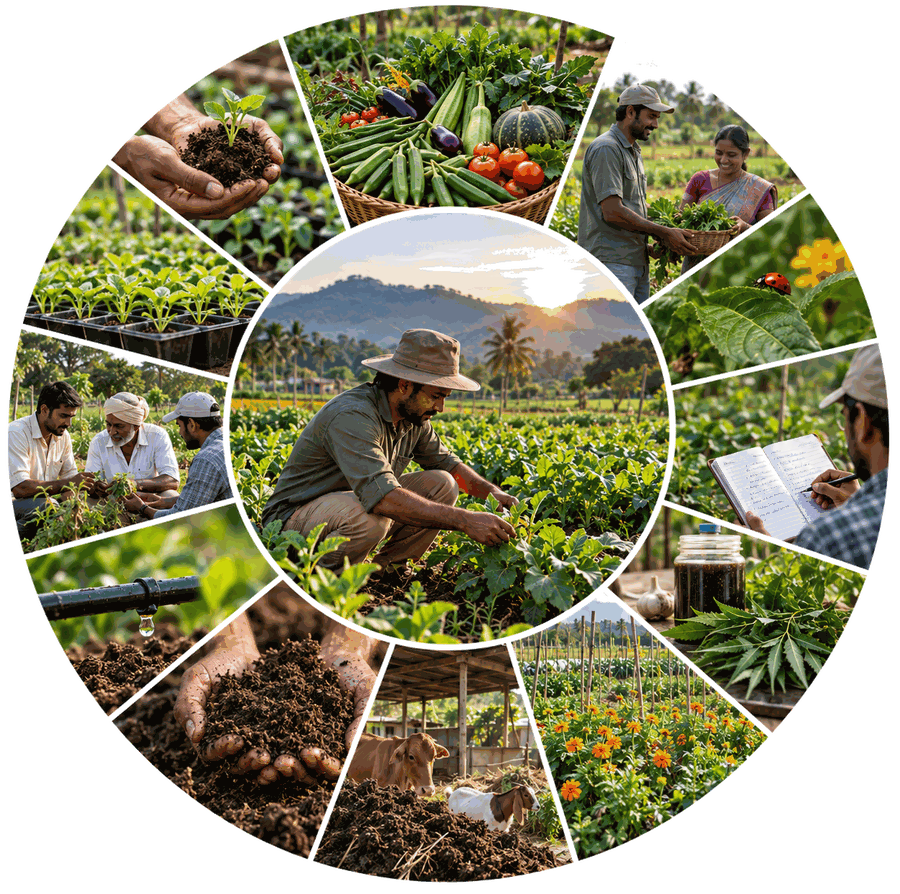
We work on a human scale. That means fields we can walk every week, observations we actually record, and experiments we can follow through a full season.
Our farm base is at Bulkapur, Hyderabad. Rice, Vegetables and all on farm inputs are made here
Open for visits
Neighbouring farmers transitioning to natural practices. We buy their produce at fair rates and co-develop inputs.
Buy-back guaranteed
A dedicated strip of plots for training demonstrations — students measure, plant, mulch and even repeat our mistakes.
Training venue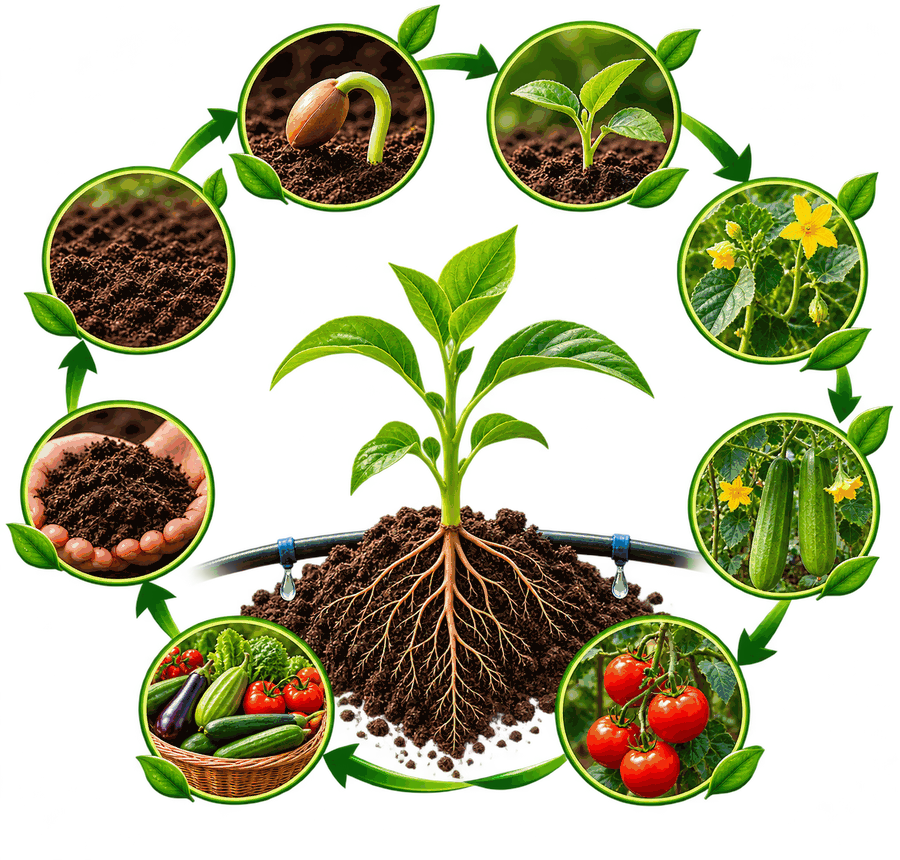
Every plot is soil-tested before planting, and again at season end. That data decides our amendments and rotations.
Retentive & heavy — great for pulses and millets with proper drainage.
Free-draining — vegetables and groundnut love it with mulching.
Clay-rich basins for rice, rested between kharif seasons.
Compost, biochar and cover crops push organic carbon up year on year.
Tap any practice to see what we do and why.
No plot grows the same family twice in a row. Rice to vegetables means pests lose their host plants, and weeds are managed by changing the game every season.
Crop residues, dried weeds and leaves stay on the surface. Mulch keeps soil temperature stable, holds moisture through dry weeks and feeds the soil food web as it breaks down.
Two on-farm systems: windrow compost for volume and vermicompost for fine, cured humus. Both are built from farm waste.
Crop residue is pyrolysed in low-oxygen kilns we built ourselves, then 'charged' with compost. It locks carbon in the soil for decades and works like a sponge for water and nutrients.
Agnihastra, natural soap solution, neem oil sprays, mud spray, wood ash, trap crops, insect traps. We monitor every week and act on thresholds.
Jeevamrutham, panchagavya, vermiwash, JADAM Solutions, farm made fish amino acids, NPK and micronutrient supplements from farm waste, bio-stimulants are brewed on-farm, they are applied to the soil with dedicated planned schedules.
Alternate wetting and drying (AWD) for rice, drip for vegetables, and zero run-off farm ponds. Every drop is counted, because every drop we save can make a huge difference for future water requirements.
Tap a crop card to see its season, rotation and the natural inputs it gets.
Book a visit and walk the same rows you read about here.